A CSV import looks like a simple upload, but the quality of that file decides whether later campaigns reach real customers or create a long list of failures. We will look at the customer experience first and then work backwards into the rules, ownership, and measurement needed to run it well. This article is written for businesses moving customer records from spreadsheets, billing software, event forms, or an older messaging tool, so the advice stays close to day-to-day business work instead of abstract marketing theory.
1.Why import WhatsApp contacts from CSV deserves a proper process
WhatsApp is personal. A customer sees a business message beside conversations with family, colleagues, and friends, which raises the standard for relevance. Clean contact data improves delivery, personalisation, segmentation, support context, and compliance across every WhatsApp workflow that follows. Good execution begins with permission, accurate contact data, an approved message format when required, and a clear reason for sending. The business should be able to explain the value of every message in one sentence. If it cannot, the message probably needs another edit. Technology should make the service feel more attentive, not more robotic, and every automated path should still provide a sensible route to a person.
2.Start with the customer outcome
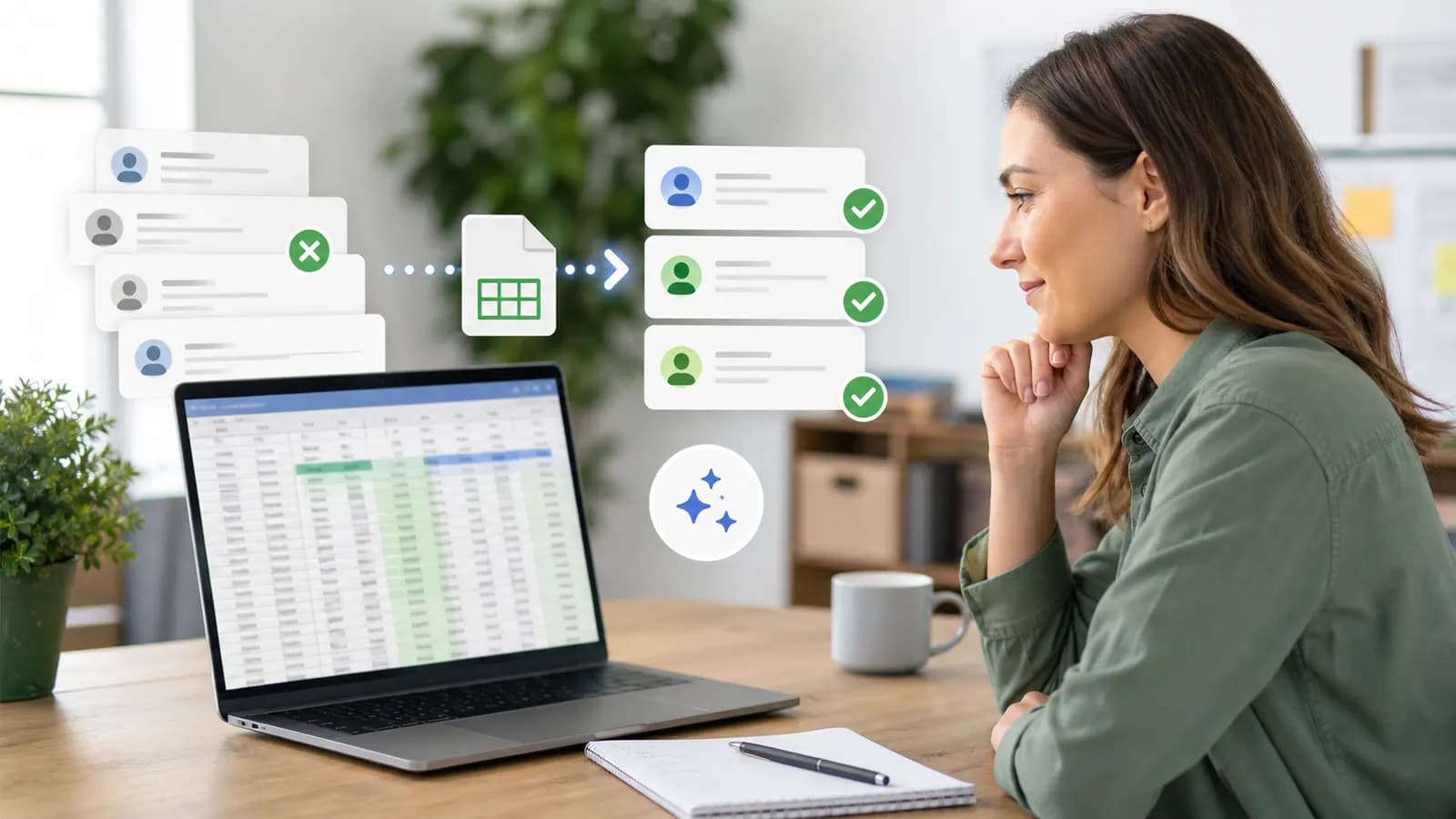
Treat the spreadsheet as customer data that needs an owner, a source, a consent decision, and a repeatable cleaning process. Before configuring anything, write down the event that starts the workflow, the customer who should receive it, the outcome the message should create, and the person responsible when automation cannot finish the job. This prevents a sophisticated sequence from becoming an ownerless process. Use a small internal test list first. Check names, number formatting, variables, links, images, buttons, timing, and opt-out behaviour. Only then move to real customers who have agreed to receive the relevant communication.
3.Start with a controlled export
Export only the columns needed for messaging instead of moving an entire customer database full of private or irrelevant fields. Customers never see the setup behind the scenes; they only notice whether the message arrives at the right moment and helps them move forward. Prepare name, international phone number, useful tags, and permission status in a fresh working file. A salon may export customer name, mobile number, preferred branch, service category, and reminder consent. Keep the first version intentionally simple, watch what customers actually do, and improve the workflow from evidence rather than assumptions. Read the finished message on a phone before sending it widely. If the next action is not obvious in a few seconds, simplify the copy or the flow. Never mark every imported row as opted in just to make the audience larger. Test the normal path as well as missing data, an incorrect phone number, a late reply, and a customer who wants to stop messages. Those edge cases are where a polished workflow proves its value.
4.Normalise every phone number
WhatsApp matching depends on a valid international number, and inconsistent country codes create duplicates or unreachable contacts. Treat the workflow as an operating system rather than a one-time campaign trick, with a clear owner and a documented reason for every rule. Convert Indian numbers to a consistent 91XXXXXXXXXX format and remove spaces, dashes, and accidental text. The same customer should not appear once as 098..., once as +91..., and once with spaces. Keep the first version intentionally simple, watch what customers actually do, and improve the workflow from evidence rather than assumptions. Read the finished message on a phone before sending it widely. If the next action is not obvious in a few seconds, simplify the copy or the flow. Do not upload a master spreadsheet containing sensitive columns that messaging teams do not need. Test the normal path as well as missing data, an incorrect phone number, a late reply, and a customer who wants to stop messages. Those edge cases are where a polished workflow proves its value.
5.Remove duplicates and risky rows
Duplicate contacts waste message limits and can make a legitimate campaign feel like spam when the same offer arrives twice. A dependable setup balances customer convenience with sensible controls, useful fallbacks, and an easy route to a human conversation. Deduplicate by normalised phone number and quarantine rows with missing names, impossible lengths, or unknown consent. Keep uncertain records in a separate review sheet rather than guessing and uploading them. Keep the first version intentionally simple, watch what customers actually do, and improve the workflow from evidence rather than assumptions. Read the finished message on a phone before sending it widely. If the next action is not obvious in a few seconds, simplify the copy or the flow. Never mark every imported row as opted in just to make the audience larger. Test the normal path as well as missing data, an incorrect phone number, a late reply, and a customer who wants to stop messages. Those edge cases are where a polished workflow proves its value.
6.Tag the source during import
A source tag explains where the relationship began and makes future audience decisions easier to defend. The useful question is not whether the feature sounds impressive. It is whether it removes a real delay, repeated task, or missed customer moment. Add tags such as website-customer, july-event, jaipur-store, or service-reminder before upload. When planning a local offer, the team can select Jaipur buyers without scanning the original spreadsheet again. Keep the first version intentionally simple, watch what customers actually do, and improve the workflow from evidence rather than assumptions. Read the finished message on a phone before sending it widely. If the next action is not obvious in a few seconds, simplify the copy or the flow. Do not upload a master spreadsheet containing sensitive columns that messaging teams do not need. Test the normal path as well as missing data, an incorrect phone number, a late reply, and a customer who wants to stop messages. Those edge cases are where a polished workflow proves its value.
7.A practical business example
A coaching centre has 4,000 rows collected from admissions, webinars, and old enquiry forms. It creates separate consent-aware files, standardises numbers, removes duplicates, and tags each source before importing. Later campaigns become smaller but much more relevant. The example works because the customer receives information connected to something they actually did, the message contains enough context to be trusted, and the next step is obvious. There is no exaggerated language or long sales pitch. A short, specific message respects the reader's attention. The team also benefits because the conversation arrives with useful history attached, allowing an agent to take over without asking the customer to begin again.
8.How to measure whether it is working
Define success before launch. For this workflow, success means every imported contact has one valid phone number, a known source, a clear permission status, and tags that support a real business use case. Do not judge the result by message volume alone. A high send count can hide poor delivery, irrelevant targeting, repeated questions, or customers opting out. Review the numbers beside a sample of real conversations. Quantitative data shows where a problem exists; the conversation usually explains why. Change one meaningful element at a time, then allow enough traffic to learn whether the change helped.
- Percentage of imported rows accepted without duplicate, formatting, or missing-data errors.
- Delivery and failure rates, reviewed separately instead of being hidden inside a total send count.
- The number of customers who complete the intended next step after reading the message.
- Questions, complaints, handovers, and opt-outs found in a weekly sample of real conversations.
- Time saved for the team compared with the previous manual process.
9.Common mistakes to avoid
The mistakes below look small during setup, but each one can create avoidable customer frustration. Ask someone who did not build the workflow to test it from a customer's phone. Fresh eyes catch unclear wording, broken assumptions, and missing fallback paths faster than the person who has been staring at the configuration all week.
- Never mark every imported row as opted in just to make the audience larger.
- Do not upload a master spreadsheet containing sensitive columns that messaging teams do not need.
- Sending to people who did not agree to receive this type of communication.
- Launching to the full audience before testing variables, links, buttons, media, and fallback behaviour.
- Using vague copy that makes the customer guess what happened or what to do next.
10.Launch checklist
Use this checklist as the final review for import WhatsApp contacts from CSV. A workflow is ready when the data is correct, the message genuinely helps the reader, the next action works on a real phone, and the team knows what happens when the normal path fails. Keep a dated copy with the campaign or automation notes so later changes can be reviewed against the same standard.
- Confirm the WhatsApp Business number, account access, and webhook connection are healthy.
- Use accurate, permission-based contacts and remove anyone who opted out.
- Prepare name, international phone number, useful tags, and permission status in a fresh working file.
- Convert Indian numbers to a consistent 91XXXXXXXXXX format and remove spaces, dashes, and accidental text.
- Deduplicate by normalised phone number and quarantine rows with missing names, impossible lengths, or unknown consent.
- Add tags such as website-customer, july-event, jaipur-store, or service-reminder before upload.
- Test the complete journey on both Android and iPhone before the public release.
- Assign an owner for failed messages and conversations that need a human response.
- Record the launch date, audience, template version, and baseline metrics for later comparison.
Pro tip
Campaign quality begins in the spreadsheet long before anyone presses Send.
11.The sensible next step
A smaller, well-documented contact list is more valuable than a huge file filled with uncertainty and duplicate records. ScheduleKaro brings official WhatsApp Business communication, campaigns, a shared inbox, automation, and commerce workflows into one dashboard. Begin with one use case customers already ask for, run a controlled test, and improve it from real conversations. That approach creates a service people trust and a system the team can operate long after the first launch.
Frequently asked questions
What is import WhatsApp contacts from CSV?
Import WhatsApp contacts from a CSV safely, clean phone numbers, preserve consent, add tags, and build reliable campaign audiences.
Who should use import WhatsApp contacts from CSV?
It is most useful for businesses moving customer records from spreadsheets, billing software, event forms, or an older messaging tool. Start with one clear customer journey and expand only after the first workflow is reliable.
What should a business do before launching?
Treat the spreadsheet as customer data that needs an owner, a source, a consent decision, and a repeatable cleaning process. Test with a small internal audience, confirm customer permission, and make sure a team member owns exceptions.
Put this guide to work in ScheduleKaro
Schedule posts, run WhatsApp campaigns, generate AI captions and track performance — all in one place.
✓ No credit card required ✓ Free plan available
ScheduleKaro Team
We're a team of marketers and product builders helping businesses and creators grow faster with social media, WhatsApp, and AI.