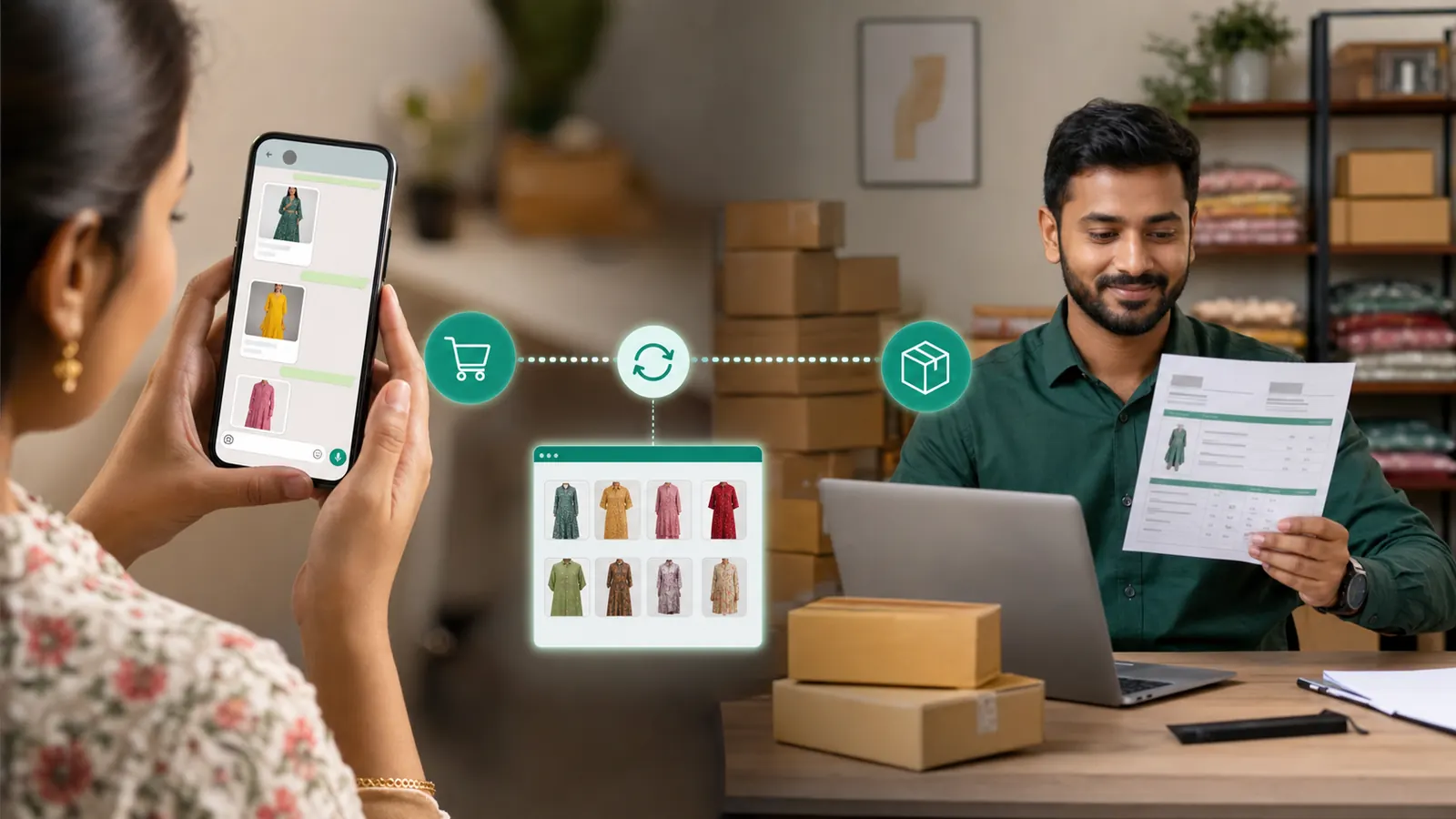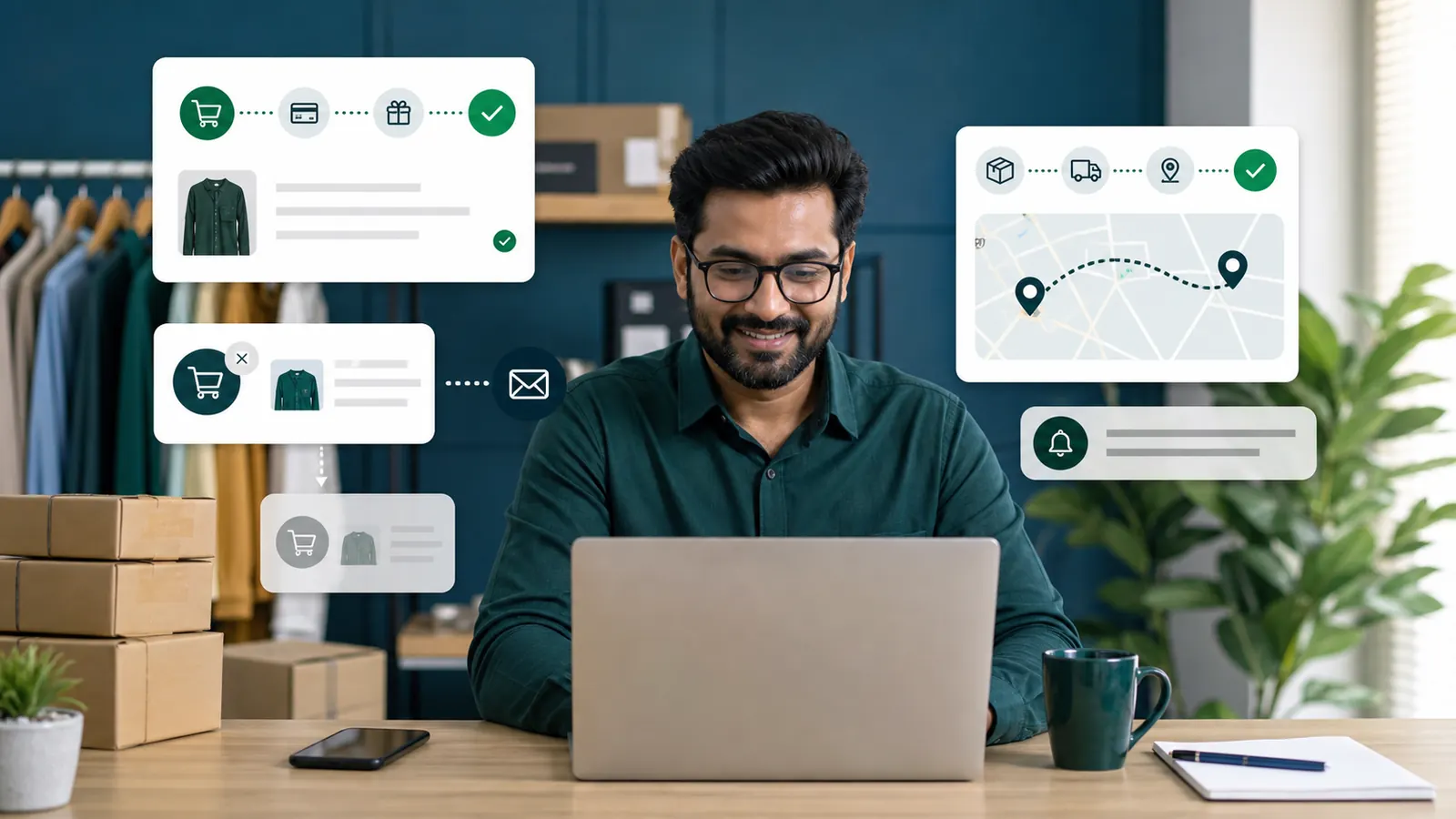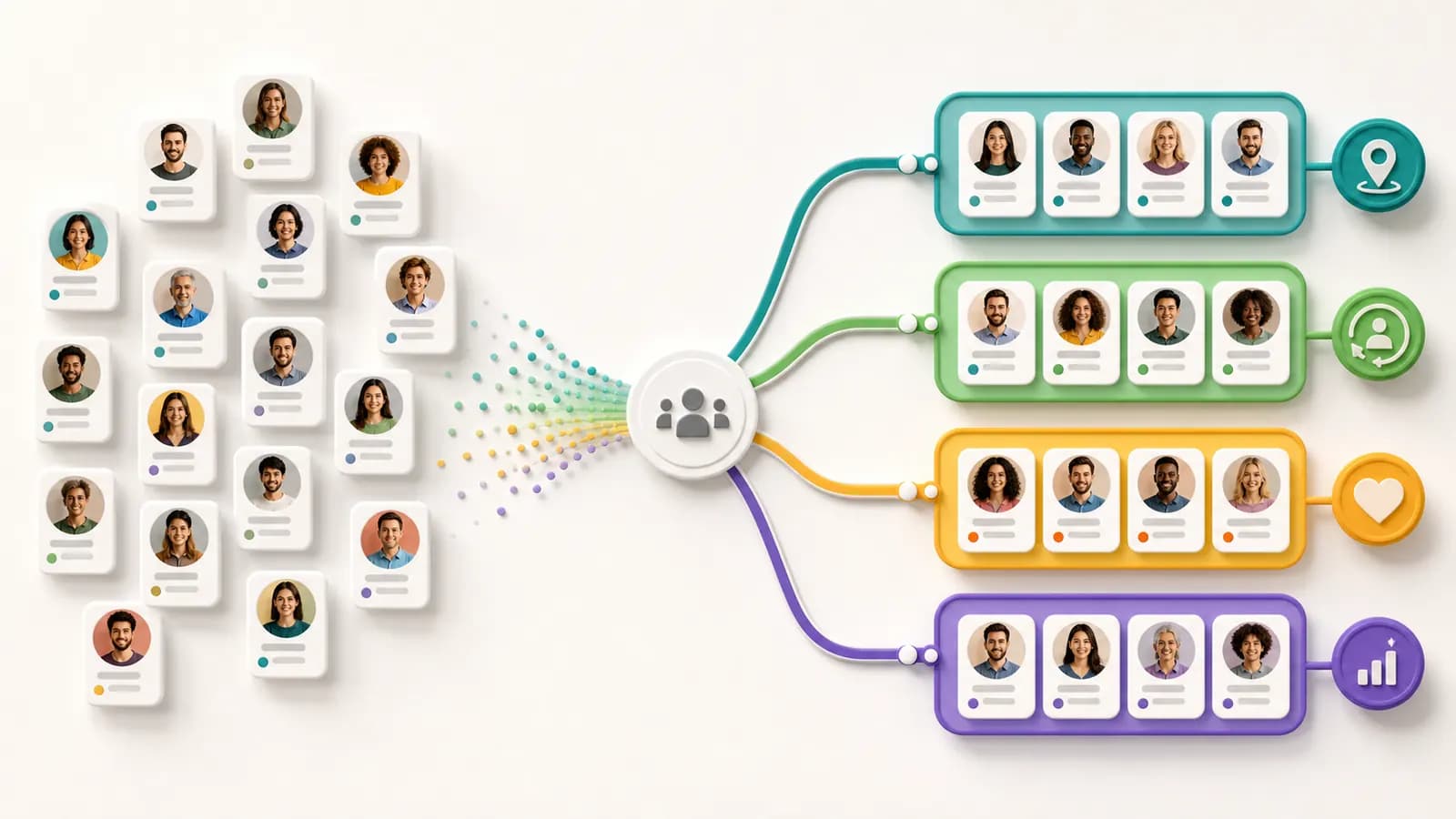
When every customer receives every message, even a good offer quickly becomes background noise. Segmentation is how a business protects relevance as its contact list grows. The strongest setup is usually simple: a useful trigger, a relevant message, an obvious next step, and honest measurement. This article is written for marketers and business owners who have enough contacts to need more relevant targeting, so the advice stays close to day-to-day business work instead of abstract marketing theory.
1.Why WhatsApp audience segmentation deserves a proper process
WhatsApp is personal. A customer sees a business message beside conversations with family, colleagues, and friends, which raises the standard for relevance. Relevant targeting reduces unnecessary messages, makes personalisation believable, and gives campaign results a clearer business meaning. Good execution begins with permission, accurate contact data, an approved message format when required, and a clear reason for sending. The business should be able to explain the value of every message in one sentence. If it cannot, the message probably needs another edit. Technology should make the service feel more attentive, not more robotic, and every automated path should still provide a sensible route to a person.
2.Start with the customer outcome
Create a segment only when it changes the message, timing, offer, or next step in a useful way. Before configuring anything, write down the event that starts the workflow, the customer who should receive it, the outcome the message should create, and the person responsible when automation cannot finish the job. This prevents a sophisticated sequence from becoming an ownerless process. Use a small internal test list first. Check names, number formatting, variables, links, images, buttons, timing, and opt-out behaviour. Only then move to real customers who have agreed to receive the relevant communication.
3.Segment by customer lifecycle
A new enquiry, first-time buyer, repeat customer, and inactive customer need different information even when they like the same product. Treat the workflow as an operating system rather than a one-time campaign trick, with a clear owner and a documented reason for every rule. Define simple lifecycle tags and decide who updates them after each important event. A new lead receives a buying guide while a repeat buyer receives a compatible-product announcement. Keep the first version intentionally simple, watch what customers actually do, and improve the workflow from evidence rather than assumptions. Read the finished message on a phone before sending it widely. If the next action is not obvious in a few seconds, simplify the copy or the flow. Do not create sensitive or discriminatory segments that are unrelated to the service. Test the normal path as well as missing data, an incorrect phone number, a late reply, and a customer who wants to stop messages. Those edge cases are where a polished workflow proves its value.
4.Use location when service differs
Location matters for branch availability, delivery coverage, local events, appointment slots, and language preferences. A dependable setup balances customer convenience with sensible controls, useful fallbacks, and an easy route to a human conversation. Tag the customer's active branch or service area instead of relying on a free-text address. A restaurant sends a Jaipur weekend offer only to customers within the Jaipur delivery area. Keep the first version intentionally simple, watch what customers actually do, and improve the workflow from evidence rather than assumptions. Read the finished message on a phone before sending it widely. If the next action is not obvious in a few seconds, simplify the copy or the flow. Do not let tags become stale after a customer's needs or lifecycle stage changes. Test the normal path as well as missing data, an incorrect phone number, a late reply, and a customer who wants to stop messages. Those edge cases are where a polished workflow proves its value.
5.Segment by demonstrated interest
Customer actions are stronger signals than broad demographic guesses because they show what someone actually explored or purchased. The useful question is not whether the feature sounds impressive. It is whether it removes a real delay, repeated task, or missed customer moment. Use product, service, event, or campaign-response tags based on real activity. People who asked about bridal makeup receive appointment availability, not a generic salon discount. Keep the first version intentionally simple, watch what customers actually do, and improve the workflow from evidence rather than assumptions. Read the finished message on a phone before sending it widely. If the next action is not obvious in a few seconds, simplify the copy or the flow. Do not create sensitive or discriminatory segments that are unrelated to the service. Test the normal path as well as missing data, an incorrect phone number, a late reply, and a customer who wants to stop messages. Those edge cases are where a polished workflow proves its value.
6.Keep the system small enough to use
A complicated taxonomy fails when staff invent similar tags or cannot remember which list is current. A process that depends on someone remembering every small step will eventually break, especially when message volume grows. Publish a short tag dictionary and merge labels that serve the same purpose. The team keeps one approved tag called repeat-buyer instead of three variations created by different agents. Keep the first version intentionally simple, watch what customers actually do, and improve the workflow from evidence rather than assumptions. Read the finished message on a phone before sending it widely. If the next action is not obvious in a few seconds, simplify the copy or the flow. Do not let tags become stale after a customer's needs or lifecycle stage changes. Test the normal path as well as missing data, an incorrect phone number, a late reply, and a customer who wants to stop messages. Those edge cases are where a polished workflow proves its value.
7.A practical business example
An education business once sent every course announcement to its full database. It then created segments for school students, working professionals, parents, and past learners. Each campaign became more focused, and replies became easier for counsellors to handle. The example works because the customer receives information connected to something they actually did, the message contains enough context to be trusted, and the next step is obvious. There is no exaggerated language or long sales pitch. A short, specific message respects the reader's attention. The team also benefits because the conversation arrives with useful history attached, allowing an agent to take over without asking the customer to begin again.
8.How to measure whether it is working
Define success before launch. For this workflow, success means customers receive fewer irrelevant messages while campaign replies and intended actions become easier to interpret. Do not judge the result by message volume alone. A high send count can hide poor delivery, irrelevant targeting, repeated questions, or customers opting out. Review the numbers beside a sample of real conversations. Quantitative data shows where a problem exists; the conversation usually explains why. Change one meaningful element at a time, then allow enough traffic to learn whether the change helped.
- Response and completion rate for each segment compared with the previous broad audience.
- Delivery and failure rates, reviewed separately instead of being hidden inside a total send count.
- The number of customers who complete the intended next step after reading the message.
- Questions, complaints, handovers, and opt-outs found in a weekly sample of real conversations.
- Time saved for the team compared with the previous manual process.
9.Common mistakes to avoid
The mistakes below look small during setup, but each one can create avoidable customer frustration. Ask someone who did not build the workflow to test it from a customer's phone. Fresh eyes catch unclear wording, broken assumptions, and missing fallback paths faster than the person who has been staring at the configuration all week.
- Do not create sensitive or discriminatory segments that are unrelated to the service.
- Do not let tags become stale after a customer's needs or lifecycle stage changes.
- Sending to people who did not agree to receive this type of communication.
- Launching to the full audience before testing variables, links, buttons, media, and fallback behaviour.
- Using vague copy that makes the customer guess what happened or what to do next.
10.Launch checklist
Use this checklist as the final review for WhatsApp audience segmentation. A workflow is ready when the data is correct, the message genuinely helps the reader, the next action works on a real phone, and the team knows what happens when the normal path fails. Keep a dated copy with the campaign or automation notes so later changes can be reviewed against the same standard.
- Confirm the WhatsApp Business number, account access, and webhook connection are healthy.
- Use accurate, permission-based contacts and remove anyone who opted out.
- Define simple lifecycle tags and decide who updates them after each important event.
- Tag the customer's active branch or service area instead of relying on a free-text address.
- Use product, service, event, or campaign-response tags based on real activity.
- Publish a short tag dictionary and merge labels that serve the same purpose.
- Test the complete journey on both Android and iPhone before the public release.
- Assign an owner for failed messages and conversations that need a human response.
- Record the launch date, audience, template version, and baseline metrics for later comparison.
Pro tip
Segmentation is not about dividing people into more lists; it is about giving each message a better reason to exist.
11.The sensible next step
Begin with three or four segments tied to real decisions, then add another only when the existing structure cannot support a useful message. ScheduleKaro brings official WhatsApp Business communication, campaigns, a shared inbox, automation, and commerce workflows into one dashboard. Begin with one use case customers already ask for, run a controlled test, and improve it from real conversations. That approach creates a service people trust and a system the team can operate long after the first launch.
Frequently asked questions
What is WhatsApp audience segmentation?
Learn how to segment WhatsApp audiences by customer intent, location, lifecycle, behaviour, and consent without creating an unmanageable system.
Who should use WhatsApp audience segmentation?
It is most useful for marketers and business owners who have enough contacts to need more relevant targeting. Start with one clear customer journey and expand only after the first workflow is reliable.
What should a business do before launching?
Create a segment only when it changes the message, timing, offer, or next step in a useful way. Test with a small internal audience, confirm customer permission, and make sure a team member owns exceptions.
Put this guide to work in ScheduleKaro
Schedule posts, run WhatsApp campaigns, generate AI captions and track performance — all in one place.
✓ No credit card required ✓ Free plan available
ScheduleKaro Team
We're a team of marketers and product builders helping businesses and creators grow faster with social media, WhatsApp, and AI.